Which Casino Games Require Skill Over Luck? The Definitive Breakdown
🎯 The eternal debate among casino enthusiasts and professional gamblers centers on one critical question: which casino games require skill over luck? The answer separates recreational players from serious advantage players, and it fundamentally determines your long-term expected value at any table. Understanding the mathematical distinction between games of pure chance and those where decision-making alters outcomes is the cornerstone of intelligent bankroll management and strategic play.
The Mathematical Framework Behind Skill-Based Casino Games
Every casino game operates on a house edge, but the crucial differentiator lies in whether player decisions influence the return-to-player (RTP) percentage. Games of pure chance maintain a fixed probability distribution regardless of player action. **Skill-based casino games** allow players to reduce the house edge through optimal decision-making, card counting, or advanced probability calculations. This distinction is not merely academic—it represents the difference between a game where the casino's margin remains constant and one where informed players can achieve a positive expected value.
Blackjack: The Gold Standard of Skill-Based Casino Gaming
Blackjack stands as the most prominent example of a casino game where skill demonstrably overcomes luck. Basic strategy—a mathematically derived set of decisions based on your hand versus the dealer's upcard—can reduce the house edge to approximately 0.5%. Advanced players who master card counting techniques can push the edge in their favor by 1-2% under favorable conditions. The game's structure, with its hit, stand, double down, split, and surrender options, creates a decision tree where every choice carries mathematical weight. 🃏
Poker: A Game of Incomplete Information and Psychological Warfare
Poker transcends traditional casino game categorization because players compete against each other, not the house. The casino merely provides the venue and takes a rake. **Texas Hold'em**, Omaha, and Seven-Card Stud all demand sophisticated skills: pot odds calculation, range analysis, position awareness, and exploitative play. A skilled poker player can achieve a positive win rate over thousands of hands, a feat impossible in pure chance games. The variance exists, but skill prevails in the long run.
Video Poker: Where Strategy Meets Random Number Generators
Video poker machines operate on random number generators, yet they incorporate a skill element that dramatically affects outcomes. Jacks or Better, Deuces Wild, and Double Bonus Poker all have optimal strategy charts that players must memorize to maximize returns. A player using perfect strategy on a full-pay Jacks or Better machine can achieve a 99.54% RTP, while a player making random holds might see that number plummet to 95% or lower. The skill lies in recognizing which cards to hold and which to discard—a decision that repeats every hand.
Sports Betting and Horse Racing: Handicapping as a Skill Discipline
Sports betting and horse racing represent skill-based wagering where information asymmetry creates opportunity. Professional handicappers analyze team statistics, injury reports, weather conditions, track surfaces, and historical data to identify mispriced lines. The casino or sportsbook sets odds based on public perception and risk management, but informed bettors can exploit inefficiencies. **Handicapping skill** developed through years of specialized knowledge can yield consistent returns, distinguishing these activities from pure lottery-style gambling.
Craps: The Nuanced Reality of Skill Versus Chance
Craps presents a fascinating case study. The dice roll itself is pure chance, but certain bets offer better house edges than others. Pass line and come bets with full odds reduce the casino's advantage to near zero. However, dice setting and controlled throwing—while debated—remain controversial. The genuine skill in craps lies in bet selection and bankroll management, not in influencing the dice outcome. Understanding which bets to avoid (proposition bets, hardways) is itself a form of applied knowledge.
Baccarat and Roulette: Pure Chance Dominance
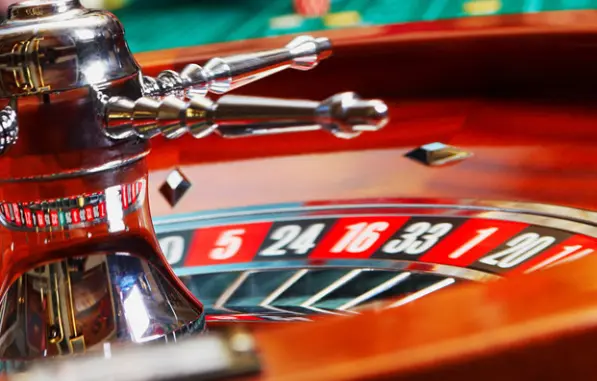
Baccarat and roulette represent the opposite end of the spectrum. In baccarat, the drawing rules are fixed, and the player's only decision is which of three bets to place—banker, player, or tie. No subsequent decisions alter the outcome. Roulette offers even less player agency; the ball lands where physics dictates, and no amount of strategic betting changes the probability distribution. These games are governed entirely by luck, with the house edge immovable regardless of player action. 🎲
Slot Machines: The Illusion of Skill in Modern Gaming
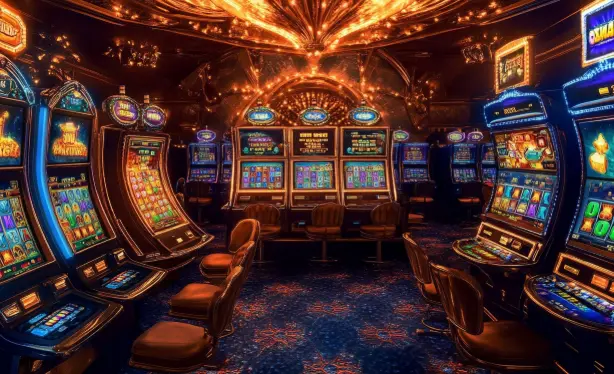
Modern slot machines occasionally incorporate "skill-based" bonus features, but the core gameplay remains random number generator-driven. The outcome of each spin is predetermined the moment you press the button. Any perceived skill in stopping reels or timing bonuses is illusory. The house edge on slots typically ranges from 2% to 15%, and no strategy can reduce it. Players seeking skill-based engagement should look elsewhere.
Daily Fantasy Sports and eSports Betting: Emerging Skill Categories
Daily fantasy sports and eSports betting have carved out legitimate skill-based niches in the broader gambling ecosystem. DFS contests require roster construction, salary cap management, and player projection analysis. eSports betting demands deep knowledge of game patches, team compositions, and meta shifts. These emerging categories blur the line between traditional gambling and professional competition, attracting analytically minded participants who thrive on information advantages.